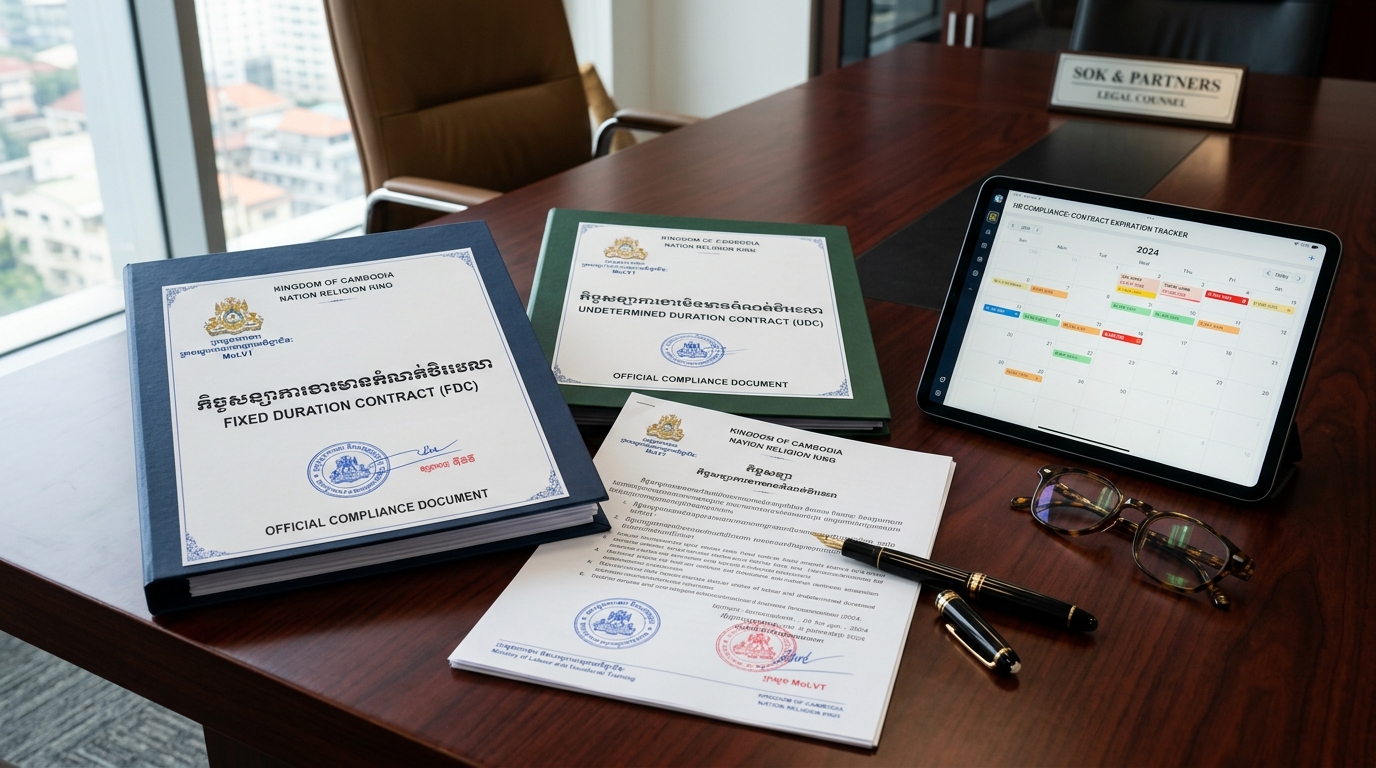

1. First, Which Contract Is It?
The rules depend on the type of contract (see our FDC vs UDC guide):
- Fixed duration contract (FDC) — ends on its end date. At the end, the employee receives an indemnity of 5% of the total wages paid during the contract (Article 73).
- Undetermined duration contract (UDC) — continues until one side ends it with notice.
2. Notice Periods for UDC Employees
Under Article 75 of the Labour Law, the notice period depends on continuous service:
| Length of service | Notice |
|---|---|
| Up to 6 months | 7 days |
| More than 6 months to 2 years | 15 days |
| More than 2 years to 5 years | 1 month |
| More than 5 years to 10 years | 2 months |
| More than 10 years | 3 months |
- Pay in lieu of notice: If the employer ends the contract without giving notice, it must pay the wages the employee would have earned during the notice period (Article 77).
- Time to look for a job: During the notice period, the employee may take two days per week of paid leave to look for a new job (Article 79).
- Resignation: Notice applies to the employee too. Put the notice the employee must give in the contract or internal rules, so there is no argument about it later.
Serious misconduct: Where an employee is dismissed for serious misconduct (Article 83), notice and severance do not apply — but the employee is still owed the final salary and unused annual leave. Document the misconduct carefully; it is the most disputed type of dismissal.
3. What Goes Into the Final Pay
Final pay = unpaid salary for days worked
+ approved overtime not yet paid
+ unused annual leave
+ seniority indemnity owed for the current period (UDC)
+ pay in lieu of notice (if notice was not given)
+ 5% end-of-contract indemnity (FDC only)
− salary advances and agreed deductions − NSSF employee share and Tax on Salary
Seniority indemnity is 15 days of wages per year, paid in June and December under Prakas 443/18; when someone leaves, work out what is owed for the part of the half-year already worked (our seniority indemnity guide has the formula).
Pay promptly: The Labour Law requires final wages and indemnities to be paid quickly after the contract ends — guides commonly cite 48 hours. Do not hold the final pay until the next regular pay day; if your situation is unusual, check with a labour lawyer.
4. Offboarding Checklist
- Confirm the last working day in writing (resignation letter or termination letter).
- Calculate the final pay using the formula above, and have the employee sign for it.
- Issue a work certificate stating the dates of employment and the job held (Article 94).
- Collect company property: uniforms, keys, laptops, phones, ID cards.
- Turn off the employee's access to company systems on the last day.
- Update the employee's status for NSSF so contributions stop at the right month.
5. How AttendKH Helps
AttendKH keeps the numbers you need for the final pay in one place: days worked and approved overtime from attendance, the annual leave balance, and salary history in payroll. When you change an employee's status to resigned or terminated, their login to the mobile app is ended automatically, so a former employee cannot check in or open payslips. A list of company assets assigned to the person helps you collect everything on the last day.
6. Conclusion
Get three things right when someone leaves: the notice period (or pay in lieu), a complete final pay, and a clean handover of property and system access. Write the employee's own notice period into the contract, and keep attendance and leave records accurate all year so the final pay is easy to prove.
See AttendKH pricing, download the app from downloads, or contact our team.