
1. The 2027 Minimum Wage at a Glance
On 30 September 2026, Prime Minister Hun Manet announced the 2027 minimum wage for workers in the garment, footwear and travel goods sector: $212 per month. The National Council on Minimum Wage had voted for $210; the Prime Minister added $2 on top.
| Item | 2026 | 2027 |
|---|---|---|
| Monthly minimum wage | $210 | $212 |
| Increase | — | +$2 (≈1%) |
| Effective date | 1 Jan 2026 | 1 Jan 2027 |
The government said that with the existing allowances and benefits added, total monthly pay for a regular worker comes to roughly $231.50 to $242.50. Unions had asked for considerably more, so expect the topic to stay in the news.
Who it covers: The official minimum wage applies to the garment, footwear and travel goods sector. Many other employers — restaurants, retail, construction — use it as a benchmark when setting entry-level pay, so it is worth reviewing your own pay scale even if you are outside the sector.
2. What a Higher Base Salary Changes in Payroll
The base salary is the starting point for almost every other line on the payslip. When it changes, these change with it:
- Hourly rate — the common benchmark is base salary ÷ 26 days ÷ 8 hours.
- Overtime — paid at 150% on normal days and 200% at night, on the weekly rest day and on public holidays (see our overtime and NSSF guide).
- Seniority indemnity — under Prakas 443/18, 15 days of wages per year, paid in June and December, is based on the current wage (see the seniority indemnity guide).
- Unpaid leave and absence deductions — a day's deduction is worth slightly more.
3. The Numbers for a $212 Worker
Hourly rate: $212 ÷ 26 ÷ 8 = $1.019 per hour
Overtime at 150%: $1.019 × 1.5 = $1.53 per hour
Overtime at 200% (night, rest day, public holiday): $1.019 × 2 = $2.04 per hour
Seniority indemnity, June instalment (7.5 days): $212 ÷ 26 × 7.5 = $61.15
A worker earning $212 is well below the ៛1,500,000 tax-free threshold for Tax on Salary, so the minimum wage itself does not trigger salary tax. Bonuses and overtime count towards taxable salary, though, so check workers with heavy overtime (our tax on salary handbook has the brackets).
4. A Checklist Before January Payroll
- List every employee whose base salary is below $212 on 1 January 2027.
- Update their base salary in your payroll records before the first January pay run.
- Check new hires and staff on probation, and confirm the rate that applies to them in the official Prakas.
- Confirm that overtime, absence deductions and seniority indemnity use the new base.
- Tell employees about the change in writing — a short notice in Khmer avoids questions on pay day.
- Keep a copy of the old and new salary for your records.
Common mistake: Updating salaries in the middle of January. Cambodian employers pay twice a month under Prakas 442, so the first January instalment must already use $212 — otherwise you end up paying a difference later.
5. How AttendKH Helps
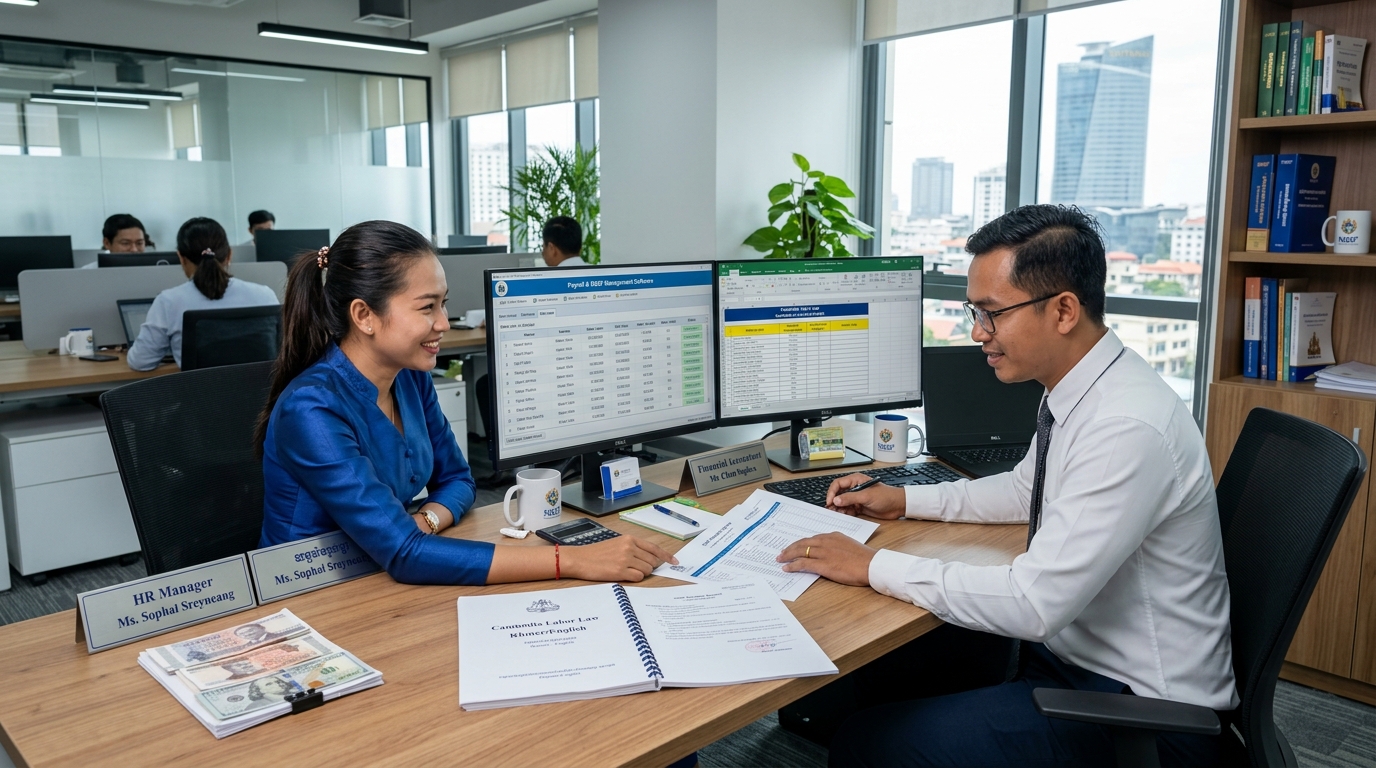
In AttendKH Payroll, the base salary is set once per employee. Once you update it, the hourly rate, overtime at 150% and 200%, and absence deductions are recalculated from the new figure automatically. Attendance comes from GPS and selfie check-ins in the mobile app, so overtime hours are already counted when payroll runs.
6. Conclusion
The 2027 increase is small — $2 a month — but it touches overtime, seniority pay and every January payslip. Update base salaries before the first January pay run, tell your team, and let the payroll system recalculate the rest.
See AttendKH pricing — $1 per employee per month — download the app from our downloads page, or contact our Phnom Penh team for a walkthrough before January.